A water softener in Qatar, only where it earns its place.
Most buildings in Qatar run on Kahramaa's desalinated mains, and one study in Doha found that water low in dissolved minerals, so a softener is seldom the first answer for a home on the mains. Groundwater is another matter. A 2024 study of 205 wells measured average calcium of about 345 mg/l and magnesium of about 127 mg/l. Regal is for farms and estates on those wells, for softening ahead of RO, and for equipment that has a hardness limit.

A farmhouse kitchen, a laundry or a whole estate.
Start with the property and the source. We confirm the model once we know where the water comes from, what it contains and your peak flow.
Homes & light commercial
Compact cabinets on the US-made Clack DV valve that sit under a kitchen sink. The 100 and 150 suit a farmhouse or estate villa on well water; the 200 covers larger houses and small kitchens whose machines need soft water.
- 1.0 to 1.8 m3/h of soft water
- 1.8 to 5 m3 between regenerations
- Salt and water used only when metered
- 30 W draw
Commercial & light industrial
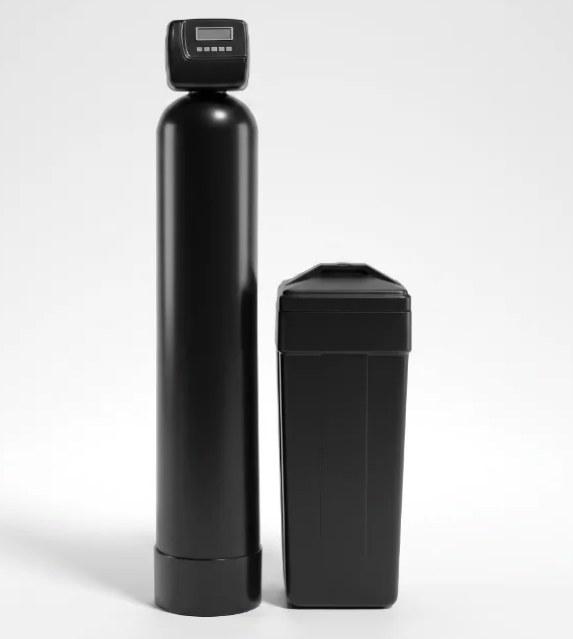
A free-standing softener with its own pressure vessel and brine tank, for hotel laundries, boiler feeds and light production that set a hardness limit.
- 6.12 m3/h softened flow
- 10 × 54" pressure vessel
- 125 L brine tank, overflow protected
- Regenerates by metered volume, not by clock
Industrial
Larger and twin-tank systems for farms, estates and plants on well water, including softening ahead of an RO plant to protect its membranes.
- 3.5 to 18.2 m3/h softened flow
- 15 m3 between regenerations on the 750
- Twin vessels take turns, so soft water never stops
- Up to 6 units on a single controller

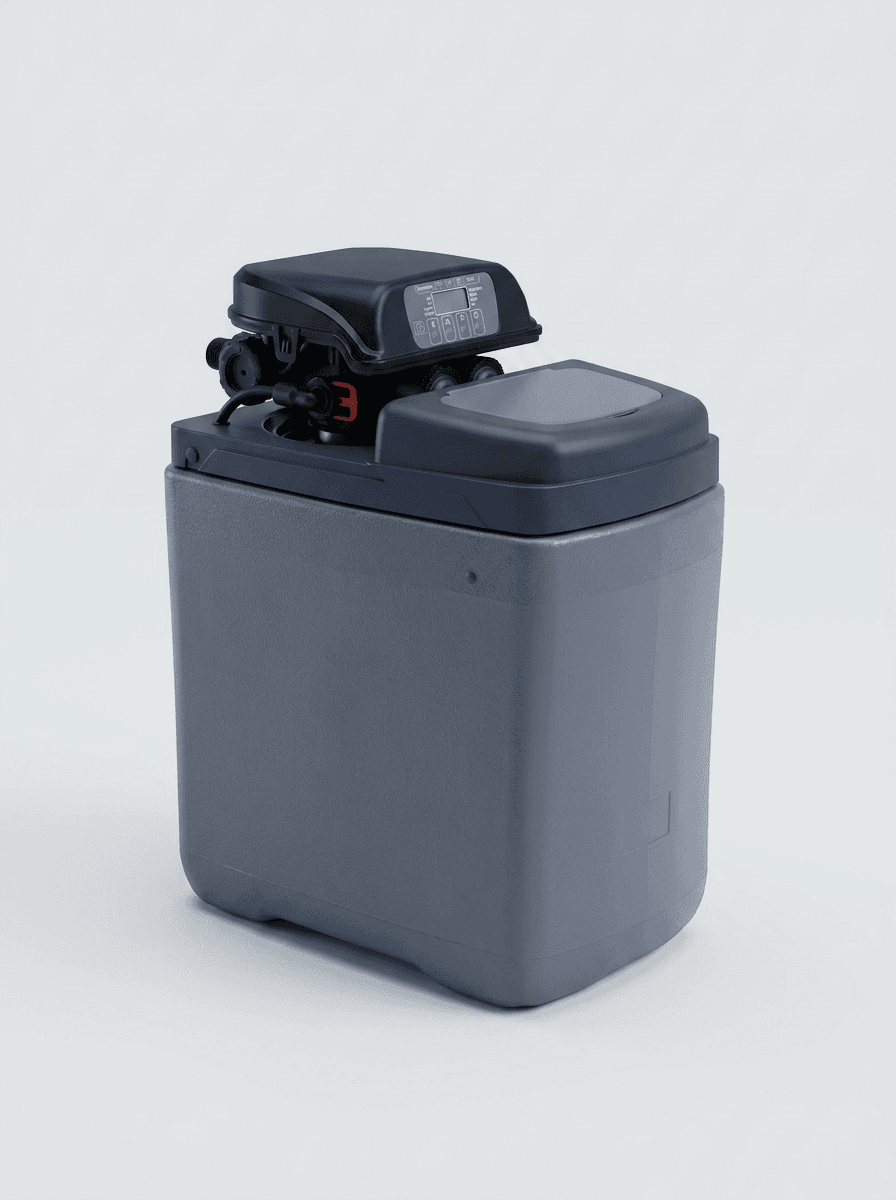

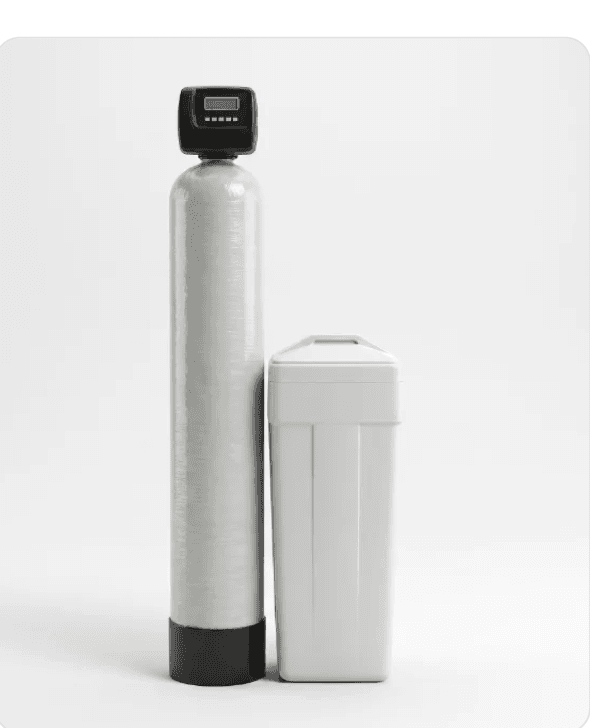
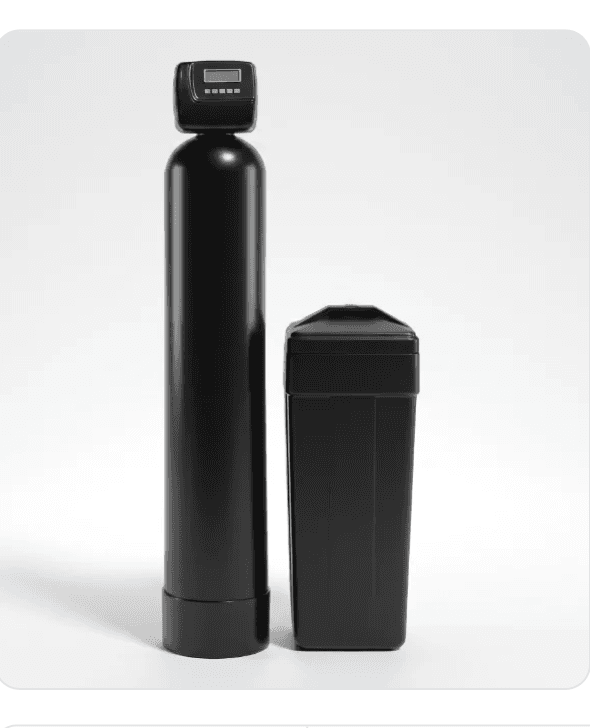
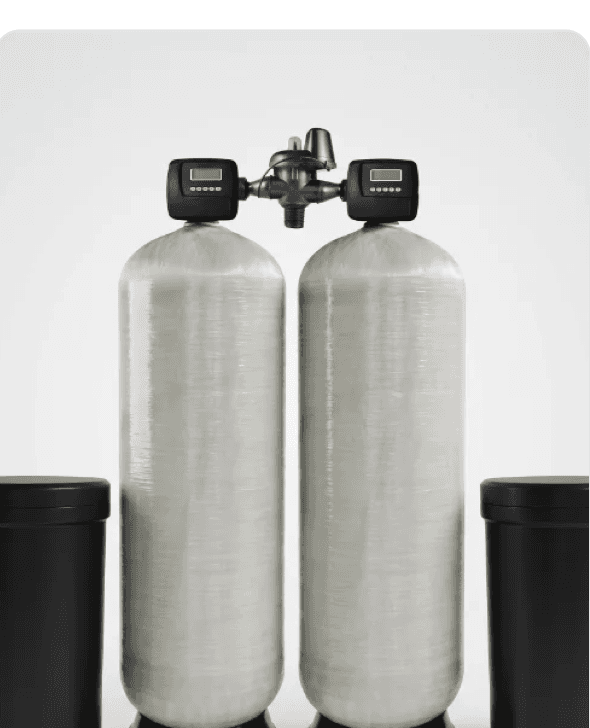
Every Regal, side by side.
All figures come from the manufacturer datasheets. Open a model to see its full specification.
| Model | Type | Soft-water flow | Capacity | Size | Best for |
|---|---|---|---|---|---|
| Regal 100 | Under-sink cabinet | 1.0 to 1.2 m3/h | 1.8 m3 | 270 × 430 × 469 mm | Small to medium homes |
| Regal 150 | Under-sink cabinet | 1.3 to 1.5 m3/h | 3 m3 | 270 × 430 × 539 mm | Small to medium homes |
| Regal 200 | Under-sink cabinet | 1.6 to 1.8 m3/h | 5 m3 | 270 × 430 × 741 mm | Large homes, light commercial |
| Regal 500 | Floor-standing, separate brine tank | 6.12 m3/h | Metered by volume | 10 × 54" tank, 125 L brine | Large homes, light commercial |
| Regal 750 | Floor-standing bi-block, ready-loaded | 3.5 m3/h (4.3 max) | 15 m3 | 1585 × 900 × 450 mm | Hospitality, healthcare, light industrial |
| Regal Twin 3672 | Twin alternating | 18.2 m3/h | Continuous | 2 × 36 × 72" vessels | Industrial, 24/7 supply |
How resin takes the hardness out.
Inside the softener is a bed of resin beads loaded with sodium. As hard water flows through, the beads exchange that sodium for calcium and magnesium, the minerals that form scale. Below are the parts of a metered softener at work.
- 1Bypass valve
Isolates the softener for servicing while keeping water flowing to the building.
- 2Control valve
Routes water through each stage and runs regeneration automatically.
- 3Water meter
Counts every litre of soft water, so regeneration happens only when the resin is nearly spent.
- 4Mineral tank
The pressure vessel. Headroom above the resin lets the bed lift and clean itself on backwash.
- 5Ion-exchange resin
Beads charged with sodium. Calcium and magnesium stick to them and sodium is released.
- 6Riser tube & distributor
Soft water is collected at the base of the tank and rises up the centre tube to the outlet.
- 7Salt & brine
Salt dissolves in the water at the base of the tank to make the brine used to recharge the resin.
- 8Brine well & safety float
Draws brine out and meters the refill. The float stops the tank from overfilling.
- 9Drain with air gap
Carries rinse water away. The air gap stops drain water from ever siphoning back.
- 10Drinking tap
Teed off before the softener, so one kitchen tap stays on unsoftened water.
Regenerating, only when the meter says so.
Once the meter shows the resin is close to spent, the valve begins a regeneration, at once or at a set hour such as 2 am. On a twin unit the second vessel steps in, so softened water keeps flowing.
- In service
Service
Hard water flows down through the resin and leaves as soft water. The meter counts each litre used.
- Stage 1
Backwash
Water runs up through the tank, lifting and loosening the bed and flushing trapped sediment to drain.
- Stage 2
Brine draw & slow rinse
Brine is drawn from the salt tank through the resin. It strips off the calcium and magnesium and recharges the beads with sodium.
- Stage 3
Fast rinse
A fast flow of water resettles the bed and rinses the last of the brine and hardness to drain.
- Stage 4
Brine refill
A measured volume of water refills the salt tank, making fresh brine for the next regeneration.
The stages vary by valve. Some add a second backwash, and up-flow models such as the Regal 100 and 200 push brine up through the resin to save salt.
What a softener protects on hard water.
Protects equipment
- Boilers and water heaters stay clear
- Laundry machines keep clean elements
- RO membranes scale less
- Fewer blocked valves and nozzles
Easy to see
- Soap lathers properly
- Glassware dries without spots
- No white crust on fittings
- Far less descaling
Economical
- Metering saves salt and water
- Proven Clack and CE valves
- Low-power controllers
- Serviced by our local partners
Every size, one standard of build.
Each Regal uses metered regeneration and proven valves, so an estate in Al Sheehaniya and a hotel laundry in Doha get the same engineering, scaled to the job.
- Sized to your source and flow
- Pairs with Regent filtration and RO on wells
- A separate unsoftened tap for drinking, as normal practice
- Maintenance plans from a fixed annual fee
Water softeners in Qatar, straight answers.
Q1Does my home in Doha need a softener?
Q2So where does a softener make sense in Qatar?
Q3How does a softener work?
Q4Can we drink softened water?
Q5Will a softener make well water drinkable?
Q6Who installs and services Regal?
Regal in Qatar
Before buying a water softener in Qatar, look at where your water comes from. Kahramaa's mains supply is almost all desalinated, and one study in Doha found it low in minerals, so a home on the mains rarely needs one. Groundwater is different: a 2024 study of 205 wells found high calcium and magnesium as well as salt.
Regal softeners are for the sites where scale is a real problem: farms and estates on well water, hot-water plant that keeps scaling, and RO systems that need protecting. The range runs from an under-sink unit to twin vessels, all quoted in riyals.
Common questions
Does a flat in Doha on mains water need a softener?
Usually not. The mains supply is desalinated, and a filter often does more for taste. Ask us before you buy and we will tell you whether softening is worth it.
What does a softener do?
It exchanges the calcium and magnesium that form scale for sodium. It does not disinfect and it does not remove salt, so salty well water also needs reverse osmosis.
Can we have soft water during regeneration?
With the Regal Twin 3672, yes. Its two vessels alternate, and up to six units can run from one controller.
Planned for your site, fitted by local partners anywhere in Qatar
Mains water in Qatar comes from Kahramaa and is almost all desalinated seawater. Most buildings hold it in a ground tank and a roof tank before it reaches a tap, and one study of 32 homes in Doha found it low in dissolved minerals.
Tell us your municipality, the kind of building and what the water has to do. We plan the system, quote it in riyals and our local partners arrange delivery and fitting.
Source: Kahramaa, Annual Statistics Report 2023; Kahramaa Water Installations Code (2016); Nriagu et al., Scientific Reports (2018).
Not sure you need one?
Tell us whether the site runs on mains through a tank or on a well, and what the water feeds. We'll say honestly if a Regal is worth it, and quote it with a service plan in riyals.