Commercial reverse osmosis for kitchens, clinics and farms in Qatar.
Mains water from Kahramaa is desalinated, then usually sits in ground and roof tanks on its way to a building's taps. Farm wells are another story: that water is far too salty to use untreated. An RO system takes either supply and hands your equipment identical water, hour after hour. Sizes begin with a 60 L/h unit behind a café counter and go up to plants built for production.
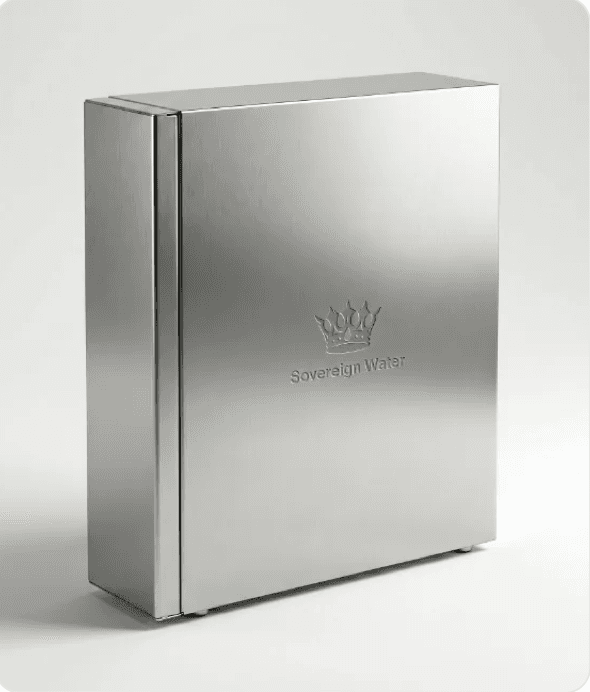
From the coffee bar to the farm well.
Work out your peak demand in litres per hour first. The feed comes next, whether that is a mains-fed tank or a farm well, and from there we choose the model.
Coffee counters & pantries
Small enough for a café back counter or an office kitchen. Steam ovens and espresso machines can draw from the Noble RO 60, while the Imperial RO goes under the counter and sends its readings over Wi-Fi.
- 60 L/h or 120 L/h output
- Noble RO 60 lets you dial in the final TDS
- Wi-Fi and a TFT screen on the Imperial RO
- Narrow enough for tight counters
Hotel, clinic & banqueting kitchens
When a hotel kitchen, a banqueting service or an ice machine needs more water, these step up, still in a compact stainless steel frame.
- Between 185 and 400 L/h
- Majestic RO filters to 0.1 micron
- Majestic 400 rejects 92 to 95%
- Majestic RO shuts off and alarms on a leak
Process water & brackish wells
Built on a skid and engineered around the water you have, salty groundwater included. Used for farm wells, bottling, manufacturing and food production.
- Capacity as high as 56 m3/h
- Rejects as much as 99% of TDS
- Made-to-order stainless skid
- Remote monitoring if wanted
Five models, smallest to largest.
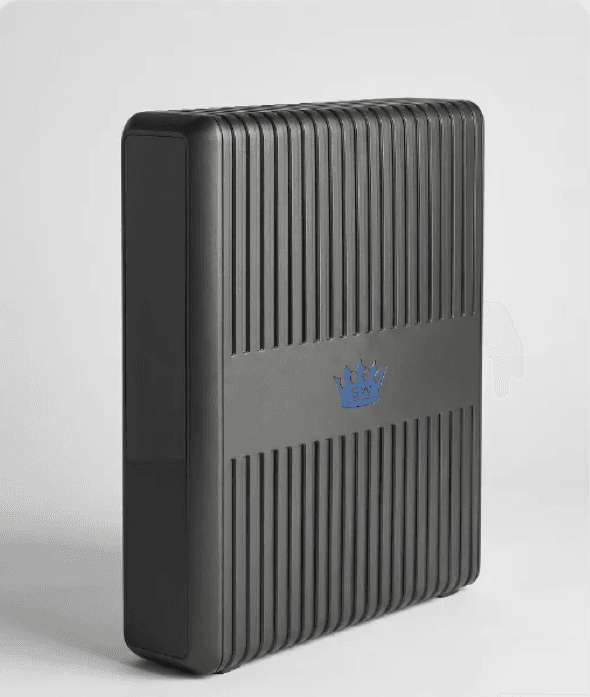
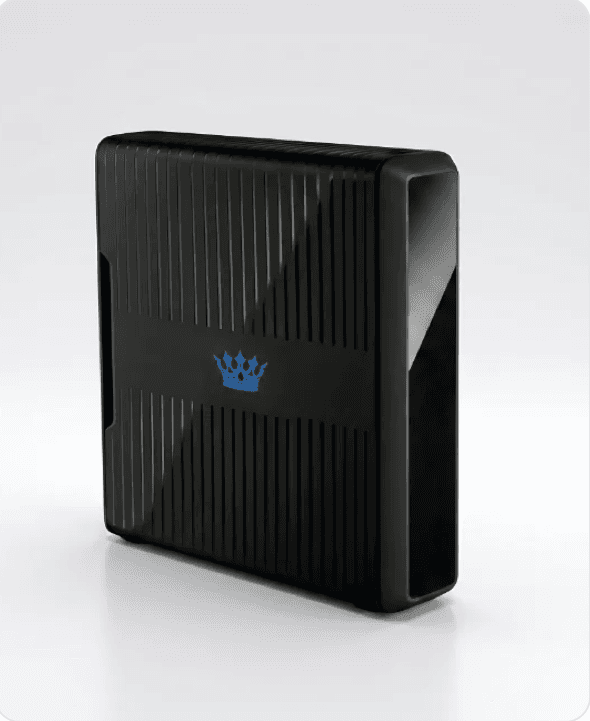
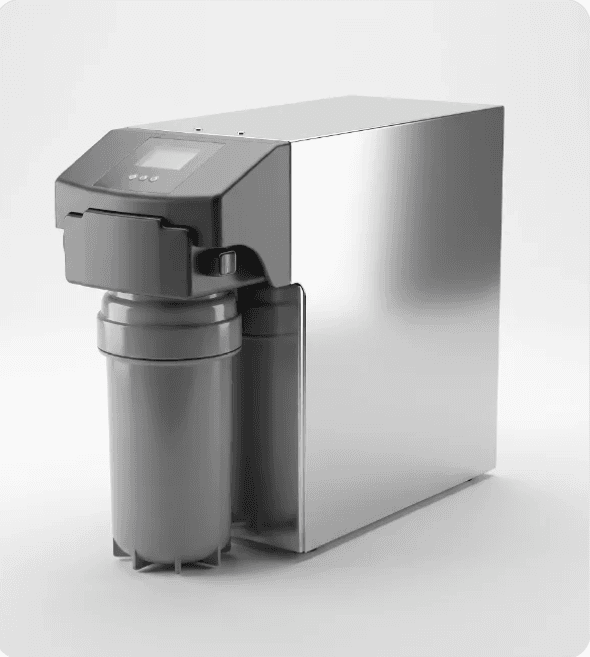

Every system, side by side.
Figures from the manufacturer datasheets. Open any model for the full specification and datasheet download.
| Model | Output | Membranes | Build | Size | Best for |
|---|---|---|---|---|---|
| Noble RO 60 | 60 L/h | 1 × 220 GPD | ABS, wall or floor | 96 × 435 × 378 mm | Speciality coffee, steam ovens |
| Imperial RO | 120 L/h | 2 × 330 GPD | Under-sink, Wi-Fi + TFT | 43 × 45 × 10.5 cm | Cafes, offices, homes |
| Majestic RO | 185 L/h | 2 × 500 GPD | Compact stainless | 51 × 40 × 13.3 cm | Restaurants, hotels |
| Majestic 400 RO | Up to 400 L/h | 4 × 500 GPD | AISI 304 stainless | 220 × 550 × 440 mm | Hotels, ice machines, kitchens |
| Industrial Reverse Osmosis | Up to 56 m3/h | Engineered to demand | Stainless, skid-mounted | Built to site | Production and process water |
Filter, purify, then keep watch.
The membrane is too fine for dissolved salts. A pump forces water through it, purified water runs on to your equipment, and the salty concentrate goes to drain.
Pre-treatment
Sediment and carbon cartridgesThese come first and catch rust particles, sediment and chlorine before they can reach the membrane.
- Rust particles and sediment
- Chlorine
- Off-tastes and odours
Why it matters: The membrane lives longer on a clean feed.
Reverse osmosis
Where the salts come outPressure from the pump pushes water across. Dissolved solids stay behind and are carried off in the concentrate line.
- TDS (total dissolved solids)
- Salt from brackish wells
- Magnesium and calcium
Why it matters: The feed can vary; what reaches your equipment does not.
Checks and alerts
Screens and alarmsEvery model watches itself, each in its own way. On the Noble RO 60 you fix a TDS and it holds it; the Imperial RO sends readings over Wi-Fi; the Majestic RO raises a warning for a leak or a filter change.
- Water quality via conductivity
- Upcoming filter changes
- Any leak or flood
Why it matters: A fault shows up on screen before it shows up in the cup.
RO always sends part of the feed away with the concentrate. With the Majestic 400 RO, recovery is 50%, which is why the water supply and drain are planned ahead of installation.
Fewer breakdowns, steadier results.
Machines last longer
- Longer working life for ovens and espresso machines
- Cleaner ice makers
- Fewer stoppages when you are busiest
- Less time spent descaling
Consistent output
- Every cup of coffee tastes alike
- Ice that comes out clear
- Process water you can rely on
- A chosen TDS held by the Noble RO 60
Kept running
- Key models warn when filters are due
- Protection against leaks
- Remote monitoring on request
- Servicing plans through local partners
No bigger than you need.
A farm in Al Sheehaniya and a coffee shop in Al Wakra have little in common. Each plant is matched to its own hourly demand and its own source water.
- Matched to your busiest hour and your source
- Pre-treatment picked for tank or well water
- Minerals added back where taste matters
- Maintenance plans start from a fixed annual fee
Questions about commercial RO.
Q1Mains water in Qatar is desalinated. Why add RO?
Q2How do I pick the right size?
Q3Can RO treat a farm well?
Q4Will RO water taste flat?
Q5Does RO waste water?
Q6Who looks after installation and servicing?
Sovereign RO in Qatar
Almost all of Qatar's mains water comes from Kahramaa's desalination plants at Umm Al Houl, Ras Abu Fontas and Ras Laffan. It then sits in ground and roof tanks before use, and RO at the point of use puts the final quality in your hands.
Reverse osmosis gives a café, hotel kitchen or production line a consistent base for coffee, ice and steam, batch after batch. Systems run from 60 L/h under a counter to 56 m³/h plants, and our partner team installs them across Qatar.
Common questions
Do we need RO if the mains is already desalinated?
It often helps. Water leaves the plant in good order, and RO at the point of use gives you a steady, known result. It removes particles and dissolved solids, and a remineraliser can then tune the taste.
What about well water on a farm?
Groundwater in Qatar goes mainly to farms, and a 2024 study of 205 wells found it too salty to drink. Reverse osmosis is the step that removes salt, with pre-treatment in front to protect the membranes.
Who maintains it?
Our local partners, on a service plan with scheduled filter changes, quoted in riyals.
Planned for your site, fitted by local partners anywhere in Qatar
Mains water in Qatar comes from Kahramaa and is almost all desalinated seawater. Most buildings hold it in a ground tank and a roof tank before it reaches a tap, and one study of 32 homes in Doha found it low in dissolved minerals.
Tell us your municipality, the kind of building and what the water has to do. We plan the system, quote it in riyals and our local partners arrange delivery and fitting.
Source: Kahramaa, Annual Statistics Report 2023; Kahramaa Water Installations Code (2016); Nriagu et al., Scientific Reports (2018).
Find the RO system for your site.
Tell us your busiest hour's demand and where your water comes from. You'll get a recommended system plus a quote in riyals covering supply, installation and servicing.